Arabica Coffee Font: Elegant Script for Handmade Labels & Invitations
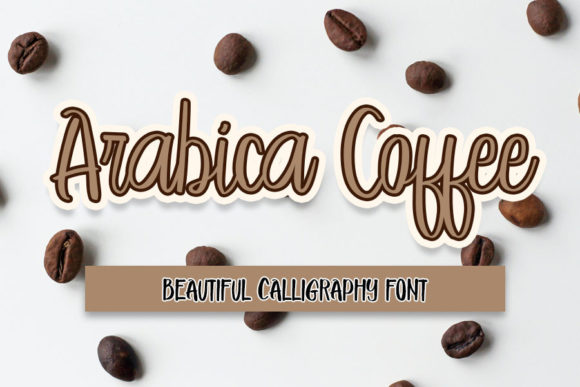
If you've ever held a beautifully printed wedding invitation that made your breath catch—or admired the soft, inviting script on a small-batch candle label—you know how much a font can shape perception. Arabica Coffee is that kind of font: a sweet, flowing calligraphy typeface where each character seems to dance gently along the baseline. It’s not stiff or overly formal—there’s warmth in its curves, confidence in its rhythm, and quiet elegance in its simplicity. As a maker who prints stickers, cuts vinyl for mugs and signs, designs digital templates, and hand-assembles boutique packaging, I reach for Arabica Coffee when I need charm without clutter.
This isn’t just another decorative script—it’s a Script Amp font built for real-world making. Its casual-yet-polished personality bridges the gap between handmade authenticity and refined presentation. Whether you're laser-cutting wooden tags for artisan soap or designing a printable baby shower planner, Arabica Coffee delivers readability at practical sizes while keeping that expressive, human touch. It’s especially effective for short, high-impact phrases: “Hand-Poured,” “Est. 2022,” “Love You More,” or a bride’s monogram on a linen napkin.
For physical product creators, Arabica Coffee shines on labels and packaging where first impressions matter. I’ve used it for lavender-scented candle jars—paired with a clean sans serif for ingredients—and customers consistently comment on how “thoughtful” and “premium” the branding feels. On kraft paper gift tags? It adds texture and intention. On acrylic wedding welcome signs cut with my Cricut Maker? It flows smoothly across the surface without jagged terminals or thin hairlines that risk breaking during weeding. That baseline dance? It translates into graceful spacing and consistent stroke weight—key for crisp cutting and legible printing at 12–24 pt.
Printable designers and SVG creators will appreciate how Arabica Coffee holds up in layered mockups. Unlike some ultra-thin scripts that vanish in low-res previews or fade on home printers, this font maintains contrast and clarity—even in grayscale PDFs or PNG exports for Etsy listings. I use it for editable Canva templates (like bridal shower checklists or minimalist wall art), always pairing it with a sturdy, neutral sans serif like Montserrat or Poppins for body text. That contrast—soft script + grounded sans—creates visual hierarchy without sacrificing warmth. For seasonal work, it’s my go-to for holiday mug designs (“Cozy Season”), Easter egg labels (“Farm Fresh”), or autumn market banners (“Harvest Market • Since 2019”).
Wedding stationery makers, take note: Arabica Coffee is gentle enough for delicate vellum invitations yet confident enough for oversized acrylic seating charts. Its elegance reads as timeless—not trendy—so your designs won’t feel dated six months after the big day. And because it’s designed with subtle alternates and natural-looking ligatures (like “fi,” “fl,” and “th”), names and phrases flow organically—no awkward collisions or forced spacing. If your version includes swashes or stylistic sets, they’re tasteful and restrained: perfect for opening lines or monograms, never overwhelming.
Readability matters most when scaling down. At 8–10 pt, Arabica Coffee works well for small sticker backs, jar ingredient lists, or tiny gift box tags—but only when used sparingly and paired with a highly legible companion font. For longer blocks of text—like event timelines or care instructions—I default to a friendly serif or geometric sans and reserve Arabica Coffee for headings, names, and decorative accents. That balance keeps your product look cohesive and professional, whether it’s viewed in person or scrolled past on Instagram.
Font pairing is where Arabica Coffee truly earns its place in your design toolkit. Try it with a warm, slightly rounded sans (think Quicksand or Nunito) for modern craft brands—or a classic serif like Playfair Display for vintage-inspired apothecary labels. Avoid competing scripts; let Arabica Coffee be the expressive voice, supported by structure and clarity from its partner. If you're building a brand identity across stickers, social posts, and packaging, that pairing becomes part of your visual signature.
Before downloading, check what’s included: OTF and TTF files for broad compatibility, multilingual support (especially useful for bilingual wedding suites or global Etsy shops), and whether stylistic alternates are accessible via OpenType features in design apps like Affinity Designer or Adobe Illustrator. If you’re creating SVG files for Silhouette Studio or Cricut Design Space, confirm the font renders cleanly in vector export—most versions of Arabica Coffee do, thanks to its balanced outlines and generous counters.
One non-negotiable: commercial licensing. If you’re selling physical products (mugs, tote bags, greeting cards), digital downloads (printables, Canva templates, SVG bundles), or client work (logo design, wedding stationery packages), verify that your license covers those uses. Most reputable Fonts sellers—including those in the Script Amp category—offer clear commercial terms. Never assume free-for-personal-use means free-for-business. A properly licensed Arabica Coffee investment pays off every time a customer chooses your shop because your typography feels intentional, trustworthy, and quietly beautiful.
At its heart, Arabica Coffee is more than a script font—it’s a tool for communicating care. Every curve tells a story of craftsmanship. Every letter invites pause. Whether it’s guiding guests to the dessert table, naming a small-batch hot sauce, or welcoming someone to your online shop, this typeface helps your handmade work speak with sincerity and style.